By Sophia Afolabi
Although the 2027 governorship election is still some distance away, political discussions across Imo State have gradually shifted toward who succeeds Governor Hope Uzodimma. While no major contender has formally declared interest in the race, consultations, strategic meetings and political alignments have continued quietly behind the scenes.
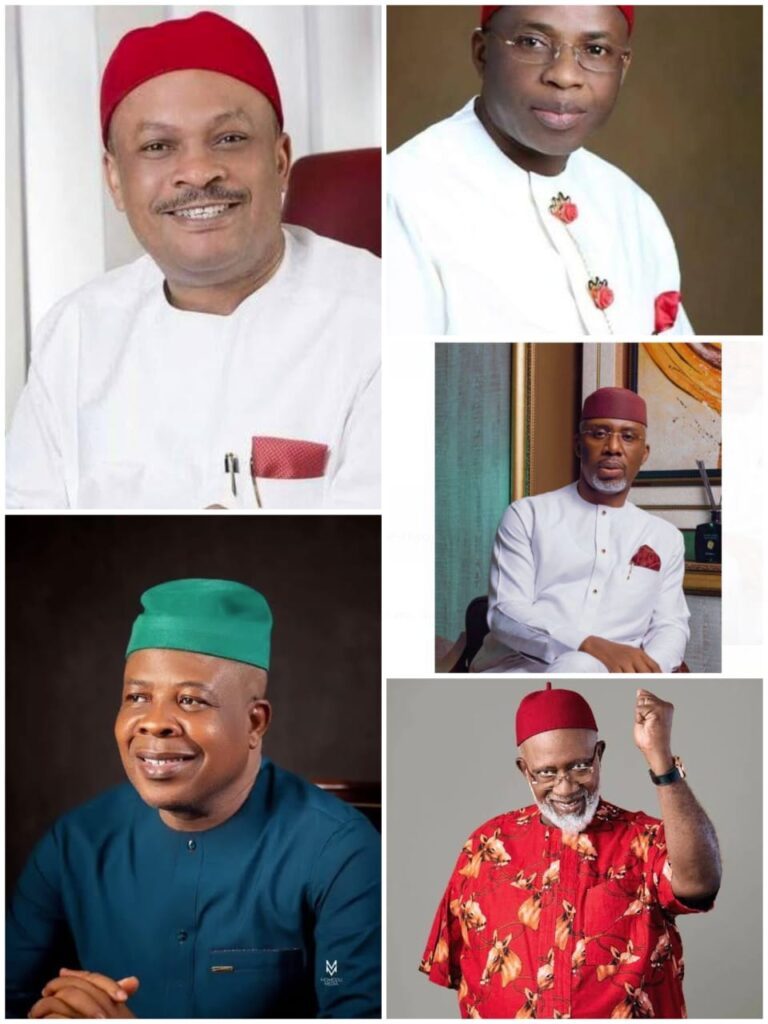
Among the names generating significant attention are former Governor Emeka Ihedioha, Senator Samuel Anyanwu, popularly known as Sam Daddy, Uche Nwosu, Athan Achonu, Ikedi Ohakim. Each brings a unique political background, support base and electoral prospects to the unfolding contest.
I. Emeka Ihedioha: Experience and Structure, but Questions Remain
Emeka Ihedioha is one of the most influential politicians from Imo State’s Owerri Zone. Born in Aboh Mbaise in 1965, he rose through the ranks of Nigerian politics from serving as a political aide in the National Assembly to becoming Deputy Speaker of the House of Representatives and later Governor of Imo State. His greatest strength lies in his vast political experience, statewide structure and strong support base, particularly in Owerri Zone.
However, his biggest challenge may be political realignment and voter perception. Some critics argue that returning to power after previously serving as governor may not appeal to voters seeking a fresh face. His political future may also depend on the platform he eventually chooses and the alliances he is able to build ahead of the election.
Current Political Position (2026)
After leaving the PDP in 2024, Ihedioha emerged as the leading face of the African Democratic Congress (ADC) in Imo State. He has actively attracted supporters from the PDP, Labour Party and other political groups into the ADC, signaling preparations for a major political contest ahead of 2027.
As of June 2026, many political observers regard Ihedioha as one of the most formidable opposition figures in Imo State and a leading contender for the 2027 governorship election. The strongest argument in his favour is the growing demand for an Owerri Zone governor and his ability to rally opposition forces under the ADC platform.
- Samuel Anyanwu (“Sam Daddy”): Grassroots Appeal and Political Resilience
Samuel Nnaemeka Anyanwu, popularly known as Sam Daddy, is one of the most prominent politicians from Imo State and a key figure in Nigeria’s opposition politics. Born on June 18, 1965, in Ikeduru Local Government Area, he built his political career through local government administration, the Imo State House of Assembly, the Senate and eventually the national leadership of the Peoples Democratic Party (PDP).
Senator Samuel Anyanwu has long been regarded as one of the state’s strongest grassroots politicians. His strength lies in his ability to connect with party members and local political leaders across the state. His experience as a local government chairman, lawmaker, senator and former governorship candidate gives him broad political exposure and name recognition.
On the other hand, Anyanwu’s challenge is converting popularity into a statewide winning coalition. Political analysts believe he may need stronger support from key stakeholders and influential blocs across the three senatorial zones. Internal party disputes and past electoral setbacks could also become issues his opponents may seek to exploit.
The Charter of Equity Question
The strongest political argument in Anyanwu’s favour is zoning. Since Orlu Zone produced Rochas Okorocha between 2011 and 2019 and is currently producing Hope Uzodimma, many stakeholders believe Owerri Zone should produce the next governor.
If zoning becomes the dominant issue ahead of the election, Anyanwu’s prospects could improve considerably because he is among the most established politicians from Owerri Zone and possesses an extensive grassroots network across the state.
3.Ikedi Ohakim: Banking on Experience and a Possible Political Comeback
Ikedi Ohakim remains one of the most prominent political figures from Imo State’s Okigwe Zone. Born on August 4, 1957, in Okohia, Isiala Mbano Local Government Area, he rose through the public and private sectors before becoming Governor of Imo State in 2007. His greatest assets are his extensive experience in governance, political network, and enduring influence across parts of the state, particularly within Okigwe Zone.
However, his path to Government House may not be straightforward. While supporters view him as a seasoned administrator capable of providing stable leadership, others believe the state may be ready for a younger generation of politicians. Questions also remain about whether voters will embrace a former governor seeking a return to power more than a decade after leaving office.
Current Political Position (2026)
In recent years, Ohakim has maintained a relatively low-profile political presence while remaining active in public discourse and state affairs. Unlike some aspirants who have openly begun building campaign structures, the former governor has largely allowed supporters and political associates to keep his name in the succession conversation.
Among political stakeholders and observers, Ohakim is widely regarded as a potential contender should he decide to enter the race. His strongest political selling point remains his record in office, wealth of experience, and ability to attract support from key political actors. However, his chances will likely depend on developments within the major political parties, the succession calculations ahead of 2027, and whether the electorate prioritizes experience over the growing demand for political renewal.
- Uche Nwosu: A Familiar Face Seeking Political Relevance Again
Uche Nwosu is one of the most recognizable political figures from Imo State’s Owerri Zone. Born on August 8, 1975, in Eziama-Obaire, Nkwerre Local Government Area, he rose to prominence during the administration of former Governor Rochas Okorocha, serving in key roles including Chief of Staff and later Commissioner. His political profile grew significantly through his close association with the Okorocha political family, making him one of the most influential figures of the Rescue Mission era. His greatest strengths remain his political experience, grassroots connections, youthful appeal, and the loyal support base he still commands across parts of the state.
Nwosu’s most notable political outing came in the 2019 governorship election, where he emerged as one of the leading contenders despite the intense political battles that characterized the race. Although he did not win, the election demonstrated his ability to mobilize support beyond his immediate political base. Over the years, he has maintained relationships with political stakeholders, community leaders, youth groups, and supporters who continue to see him as a viable governorship prospect. His name regularly surfaces whenever discussions about the next generation of political leadership in Imo arise.
Current Political Position (2026)
Unlike some aspirants who have openly declared their ambitions, Nwosu has largely remained strategic in his political engagements while keeping his support structure intact. His political future is closely tied to how alliances and realignments evolve ahead of the 2027 election. Many observers believe he still possesses enough political capital to become a major player if he secures the backing of a strong political platform and successfully rebuilds a broad coalition across the three senatorial zones.
His biggest challenge, however, is reconnecting with voters beyond the traditional Rescue Mission base and overcoming the political divisions that emerged after 2019. The changing dynamics within the APC and the emergence of new opposition forces mean he faces a more competitive political environment than before. Nevertheless, his experience, name recognition, and existing network ensure that he remains a factor that cannot be easily ignored in the calculations leading to the 2027 governorship election.
The ongoing debate around the Charter of Equity may also strengthen Nwosu’s prospects. As a politician from Owerri Zone, he stands to benefit from growing calls for power to shift to the zone in 2027.
- Athan Achonu: Banking on Opposition Politics and Coalition Building
Senator Athan Achonu is one of the most recognizable political figures from Imo State’s Okigwe Zone. Born on October 20, 1958, in Umuoba, Ehime Mbano Local Government Area, he built a successful career in business before venturing into politics. He served as Senator representing Imo North Senatorial District and later emerged as the Labour Party governorship candidate in the 2023 election. His greatest strengths are his financial capacity, private-sector experience, and reputation as a politician who operates somewhat outside the traditional political establishment in Imo.
Achonu’s profile rose significantly during the 2023 governorship election, where he became one of the leading opposition candidates. Although he did not secure victory, the campaign increased his visibility across the state and helped him establish political networks beyond Okigwe Zone. His supporters view him as a credible alternative to the dominant political forces in Imo, citing his business background and legislative experience as qualities that could translate into effective governance.
Current Political Position (2026)
Following the 2023 election, Achonu has remained active in political discussions and continues to be mentioned among potential contenders ahead of 2027. His future political relevance may depend largely on how opposition forces realign before the election. With several opposition leaders seeking a common platform to challenge the ruling APC, Achonu could benefit from coalition arrangements that create opportunities for experienced and well-known candidates.
One factor that may work in his favour is the growing search for candidates capable of attracting support beyond traditional party loyalties. However, his path to the governorship remains challenging. He faces competition from more established political structures, particularly those associated with Emeka Ihedioha, the APC establishment, and emerging contenders with stronger grassroots networks. For Achonu to become a major force in the race, he will likely need a strong political platform, strategic alliances, and a broader statewide structure capable of matching those of his rivals.
The Charter of Equity could also work in Achonu’s favour. As a prominent figure from Okigwe Zone, he may gain support from those who believe the zone deserves another opportunity to complete its turn in the governorship rotation, should political calculations shift from the current focus on Owerri Zone.
The Road Ahead
While it remains too early to predict how the contest will eventually unfold, one thing is becoming clear: the conversation surrounding Imo 2027 has already begun. As political actors continue consultations and alliances take shape, the names of Emeka Ihedioha, Samuel Anyanwu and Lady Chinyere Ekomaru are likely to remain prominent in discussions about the future leadership of the state.
For now, they may not have officially declared their intentions, but in the eyes of many political observers, they remain among the strongest potential contenders in the race to Douglas House.