
By Paul Ezenwa
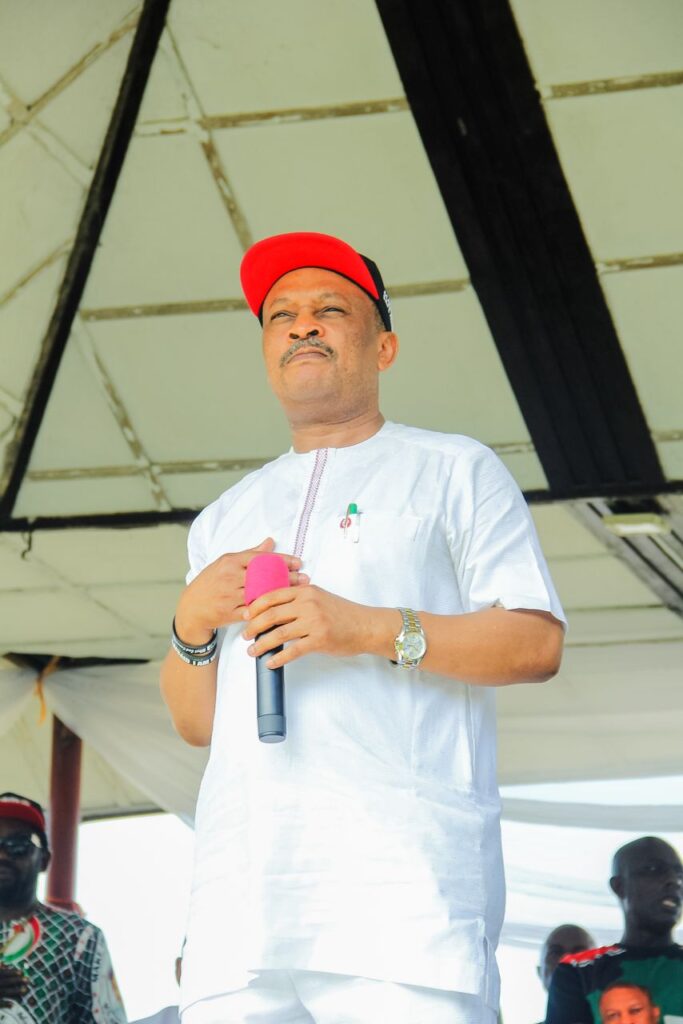
Edo State Governor, Senator Monday Okpebholo, has recently come under criticism on social media following his comment comparing petrol prices in Nigeria with those in the United Kingdom. While the remark has generated strong reactions, the broader context of the Governor’s submission points to a message centred less on denying the economic difficulties Nigerians face and more on expressing confidence that the country is gradually working its way out of them.
The reality is that Nigerians are facing difficult times. The rising cost of food, transportation, energy and other necessities continues to place pressure on families and businesses. Governor Okpebholo, who lives and interacts with the same economic realities as other Nigerians, has consistently acknowledged that the hardship is real. His reference to petrol prices was therefore not, in itself, a declaration that all is well or that Nigerians have no reason to complain.
Rather, the point he sought to make was about perspective and the direction of the economy. His optimism is rooted in his belief that President Bola Tinubu, whom he described as an economist with an understanding of the complexities of economic management, is taking steps intended to reposition the Nigerian economy. For the Governor, the current difficulties must be viewed against the longer-term objective of restoring economic stability and creating the conditions for sustainable growth.
This distinction is important because the price of a commodity, viewed in isolation, does not tell the complete story about the welfare of citizens. Nigerians understandably measure economic progress by what they can afford, the purchasing power of their incomes and the pressure on their daily lives. Those concerns are legitimate. At the same time, the Governor’s argument was that the present economic situation should not be interpreted as the final destination of the ongoing reforms.
Okpebholo’s position is essentially one of cautious optimism: things are difficult, but the country is on track to being better. His reference to the United Kingdom was therefore better understood as an illustration of fuel-price differences rather than a comparison of the living conditions or purchasing power of Nigerians and Britons. Reducing the entire argument to the phrase that Nigerians are “enjoying” themselves risks losing the larger point he was attempting to communicate.
For a Governor who regularly engages communities and hears first-hand accounts of the pressures facing households, there is little reason to interpret the remark as an attempt to dismiss those struggles. The more reasonable reading is that he was trying to reassure citizens that the difficulties of today should not extinguish confidence in the possibility of a better tomorrow.
Indeed, economic recovery is rarely instantaneous. Reforms that seek to correct structural weaknesses can produce significant discomfort before their benefits become widely felt. This does not make the hardship less real, nor does it diminish the responsibility of government to remain responsive to citizens. It simply explains why Okpebholo continues to advocate patience while expressing confidence in the economic direction being pursued.
At the core of the Governor’s message, therefore, is a simple proposition: Nigeria is not yet where it should be, but there is a deliberate effort to get the country there. His optimism should not be mistaken for a claim that the journey is complete. It is an expression of confidence that, if the economic fundamentals are properly addressed, the country can move beyond the present difficulties and begin to experience the benefits of a more stable and productive economy.
The controversy surrounding the remark ultimately offers an opportunity to look beyond a viral soundbite and engage the substance of the conversation. Nigerians deserve empathy for the difficulties they face, but they also deserve hope that those difficulties are not permanent. Governor Okpebholo’s message, properly understood, was not that hardship does not exist; it was that hardship should not become the measure of Nigeria’s future.